
EMOTION IS A MIND AND BODY’s integrated response To a stimulus of some kind .
9/3/2026 · 5 min read
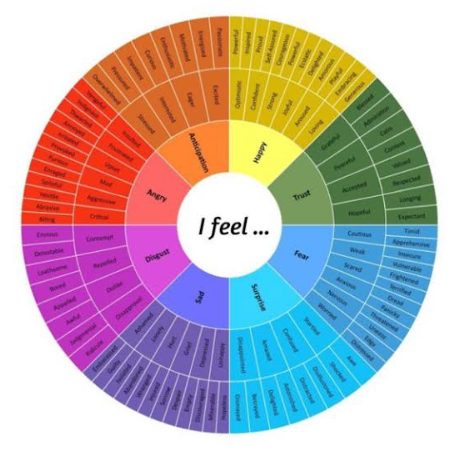
Emotions serve a purpose and have a role to play. They provide the energy and motivation needed to achieve our goals and meet our needs. Moreover, they often enhance our performance in specific situations.
Emotions significantly influence our thinking and behavior.
Emotions involve physiological arousal, expressive behaviors, and conscious experience.
Consider a scenario where someone is walking down a dark alley.
If you hear something, your mind automatically perceives it as a potential danger, triggering the flight or flight response. Your body enters panic mode, causing your heart to pound, and expressive behaviors related to fear occur as a result of physiological arousal.
Our minds have evolved certain responses to keep us safe. As a result, our bodies have automatic responses to specific neurological triggers. These are what we commonly refer to as “jerk reactions.”
Our emotions represent and shape a substantial part of who we are.
Emotions play a crucial role in motivating us to make decisions. They guide us to be cautious or bold and encourage us to understand each other better.
Earlier, it was believed that physiological reactions could cause emotions.
In the late 1800s, William James proposed that our feelings follow our bodily reactions to external situations.
James-Lange Theory: This theory suggests that our experience of emotion is our awareness of our physiological responses to emotion-arousing stimuli.
Walter Bradford Cannon introduced the Cannon-Bard Theory.
Cannon-Bard Theory: This theory posits that an emotion-arousing stimulus simultaneously triggers physiological responses and the subjective experience of emotions.
The Schachter-Singer Theory, also known as the Two-Factor Theory, suggests that to experience an emotion, one must be physically aroused and cognitively label the arousal.
- Our thoughts influence our feelings and actions.
- Arousal triggers emotions, but cognition directs the emotional response.
- Many of our emotional reactions occur independently or even before cognition takes effect.
When it comes to emotions, our brains process sensory input through two distinct approaches: the top-down or bottom-up approach.
Such stimuli that grab your attention bypass the cortex and directly reach the amygdala in the limbic system, bypassing the brain’s thinking center.
Knee-jerk reactions enable us to react swiftly.
We experience emotions not only through our brains but also through our bodies.
The “High Road” (Complex Emotions): This is the slower, more deliberate path. Information travels from our senses, passes through the thalamus, and reaches the cortex (the brain’s thinking center). There, our brain analyzes and labels the situation (e.g., “that’s a love letter”) before sending a signal to the limbic system to evoke an emotion.
The “Low Road” (Simple/Instant Reactions): This is a fast-track shortcut. Sensory information travels directly from our eyes or ears to the amygdala (the brain’s emotional hub), bypassing the cortex entirely. This allows for immediate, automatic reactions to things like sudden danger (e.g., jumping when we hear a loud crash) before our brain has time to process the situation.
The autonomic nervous system is the part of our body that manages involuntary responses, helping us maintain balance by adjusting our internal state in response to our environment.
Optimal arousal refers to finding the right level of stimulation for a given situation to maintain peak performance. Achieving this “sweet spot” enables individuals to focus their attention and function effectively, avoiding the extremes of being overwhelmed by stress or becoming too relaxed and sleepy.
Misinterpreting our emotions or someone else’s emotions can be confusing or even dangerous.
The relationship between cognition and emotion, and how the autonomic nervous system mobilizes emotions, are interconnected concepts.