
Disclaimer: The views and experiences shared in this article are based on Devi Gaddam’s personal experience and perspective. This article is intended for general awareness and supportive purposes and should not be considered professional medical, psychological, or clinical advice. Readers experiencing significant emotional distress or a mental-health crisis should seek help from a qualified mental-health professional or appropriate emergency service.
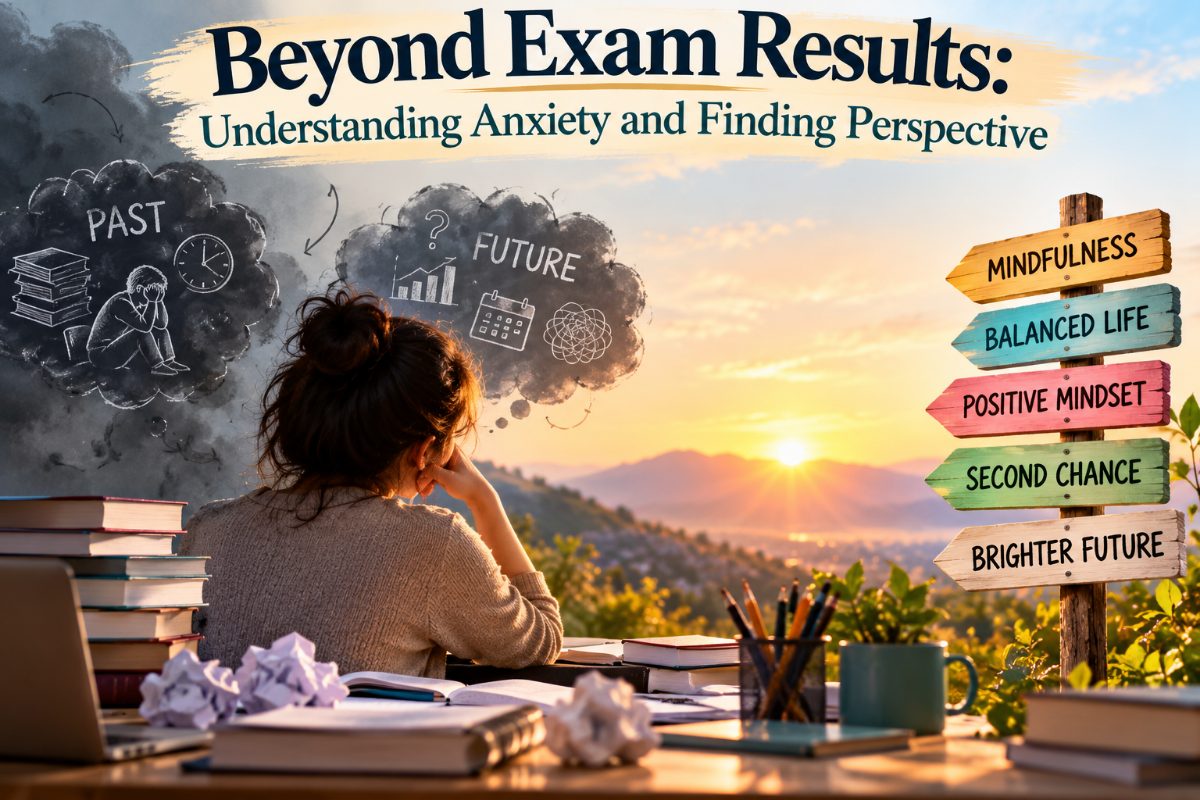
Depression revolves around dwelling on the past, while anxiety centers around anticipating the future and its potential outcomes. While it’s true that we can influence certain aspects of our lives, such as studying diligently to achieve good grades, there are instances where external factors beyond our control come into play. These include unexpected questions that deviate from the curriculum, health issues, distractions, writer’s block, and the complexities of the exam evaluation process.
To combat anxiety, here are some tips for students:
- Practice mindfulness and stay present in the moment.
- Take deep breaths and relax.
- Maintain a balanced diet and ensure adequate sleep before the test.
- Minimize distractions during the examination.
- Manage your time effectively and ensure you answer all the required questions.
- Arrive punctually at the examination center.
- Organize your belongings and bring all the necessary items for the test.
- Cultivate a positive mindset and maintain neutral expectations.
- Focus on doing your best rather than solely on the outcome.
- Remind yourself that your value is not determined by test results or the test itself.
- Recognize that there are always alternative options and a second chance.
- Remember that life is inherently valuable and not solely defined by your achievements.
- Consider the long-term perspective and understand that the outcome of a single test may not have a significant impact on your future.